メニュー
JP | JPY
-
-
-
- Challenges and Chances: A Review of the 1st Stem Cell Community Day
- Summertime, and the Livin’ Is Easy…
- Follow-on-Biologics – More than Simple Generics
- Bacteria Versus Body Cells: A 1:1 Tie
- Behind the Crime Scene: How Biological Traces Can Help to Convict Offenders
- Every 3 Seconds Someone in the World Is Affected by Alzheimer's
- HIV – It’s Still Not Under Control…
- How Many Will Be Convicted This Time?
- Malaria – the Battle is Not Lost
- Physicians on Standby: The Annual Flu Season Can Be Serious
- At the Forefront in Fighting Cancer
- Molecular Motors: Think Small and yet Smaller Again…
- Liquid Biopsy: Novel Methods May Ease Cancer Detection and Therapy
- They Are Invisible, Sneaky and Disgusting – But Today It’s Their Special Day!
- How Many Cells Are in Your Body? Probably More Than You Think!
- What You Need to Know about Antibiotic Resistance – Findings, Facts and Good Intentions
- Why Do Old Men Have Big Ears?
- The Condemned Live Longer: A Potential Paradigm Shift in Genetics
- From Research to Commerce
- Chronobiology – How the Cold Seasons Influence Our Biorhythms
- Taskforce Microbots: Targeted Treatment from Inside the Body
- Eyes on Cancer Therapy
-

-
-
-
- Challenges and Chances: A Review of the 1st Stem Cell Community Day
- Summertime, and the Livin’ Is Easy…
- Follow-on-Biologics – More than Simple Generics
- Bacteria Versus Body Cells: A 1:1 Tie
- Behind the Crime Scene: How Biological Traces Can Help to Convict Offenders
- Every 3 Seconds Someone in the World Is Affected by Alzheimer's
- HIV – It’s Still Not Under Control…
- How Many Will Be Convicted This Time?
- Malaria – the Battle is Not Lost
- Physicians on Standby: The Annual Flu Season Can Be Serious
- At the Forefront in Fighting Cancer
- Molecular Motors: Think Small and yet Smaller Again…
- Liquid Biopsy: Novel Methods May Ease Cancer Detection and Therapy
- They Are Invisible, Sneaky and Disgusting – But Today It’s Their Special Day!
- How Many Cells Are in Your Body? Probably More Than You Think!
- What You Need to Know about Antibiotic Resistance – Findings, Facts and Good Intentions
- Why Do Old Men Have Big Ears?
- The Condemned Live Longer: A Potential Paradigm Shift in Genetics
- From Research to Commerce
- Chronobiology – How the Cold Seasons Influence Our Biorhythms
- Taskforce Microbots: Targeted Treatment from Inside the Body
- Eyes on Cancer Therapy
-
JP | JPY
Sorry, we couldn't find anything on our website containing your search term.
How can we age more healthily in the future?
生命科学の探究
- 実験室の日常
- ゲノム編集/CRISPR
- 事例
- 医療
- 歴史
Thanks in part to advances in molecular biology, the human population is living longer. This is obviously great news for us as individuals, but it does create problems and concerns for society. As lifespans increase, more people will develop diseases associated with ageing, such as dementia and cancer.
もっと読む
表示を減らす
How can we not only live longer, but live healthily for longer?
もっと読む
表示を減らす
Over the past 75 years that Eppendorf has been supporting biologists, our understanding of the way humans age has come a long way. We are now able to study how genetic changes within individual cells contribute to ageing and associated diseases. This is leading to more effective treatments, for when things go wrong.
もっと読む
表示を減らす
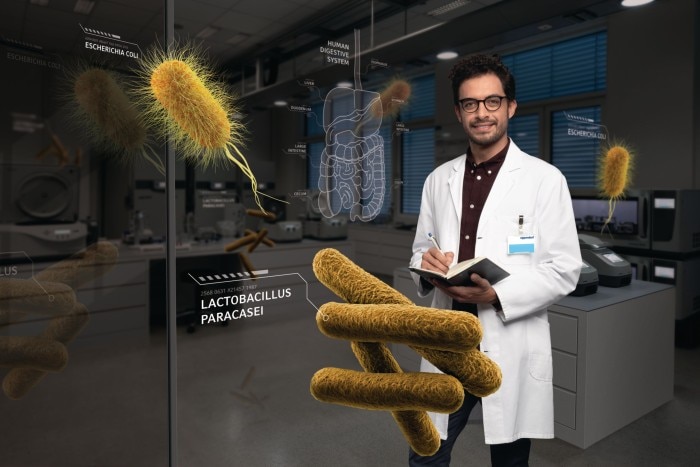
This increased understanding has revealed the important role that the microbiome plays in ageing. The microbiome is composed of all microorganisms – bacteria, fungi, protozoa, and viruses – living in or on the human body. Studies have shown how the microbiome of our intestines changes dramatically during ageing, and that these changes are linked to human health and lifespan.
もっと読む
表示を減らす
For example, the gut microbiome is thought to trigger changes in immunity and cognitive function, two key determinants in healthy ageing. Any decline in immune function increases the chance of infections and is thought to increase the chance of cancer. A decline in cognitive function is directly linked to dementia.
もっと読む
表示を減らす
Ideally, to live a healthy life for longer we want to be free of disease. New treatments have helped us live longer with diseases such as cancer, however some of the treatments can have debilitating side-effects, reducing quality of life.
もっと読む
表示を減らす
So, what are the challenges in finding cures for cancer and dementia in the next 75 years? In cancer, many successful therapies exist and thanks to researchers worldwide the breadth of therapies in continually expanding, for example with new immunotherapies such as CAR-T.
もっと読む
表示を減らす
For dementia, the number of approvals for new treatments has been much lower. Alzheimer’s disease, the most common form of dementia, is still not fully understood, but with the advent of new molecular biology techniques, such as single-cell sequencing, our understanding of dementia and cancer should intensify.
もっと読む
表示を減らす
As with the last 75 years, we will continue innovating to ensure molecular biologists have access to the most ground-breaking, reliable, and consistent products to give them the best chance of success in their research. And we look forward to continuing to reward this success through the Eppendorf Award for Young European Investigators .
もっと読む
表示を減らす
For a quarter of a century, we’ve been supporting research into ageing and other areas of molecular biology through the Eppendorf Award for Young European Investigators in partnership with the journal Nature®. In 2018, Professor Andrea Ablasser was awarded the prize for her work showing how a mechanism involved in the immune response is also activated in ageing cells.
もっと読む
表示を減らす